
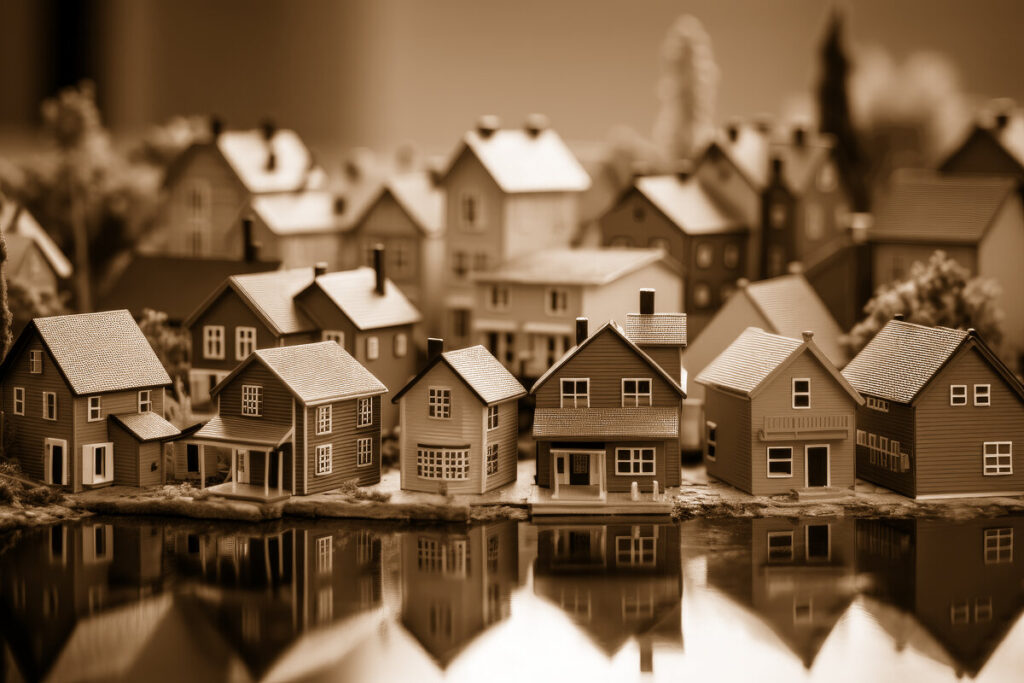
A Neighborhood with a Southwestern Outlook
Solterra is one of Lakewood’s newer neighborhoods, but its sense of place feels older than its age. Tucked against the foothills southwest of central Lakewood, the community is defined by broad mountain views, gently rising streets, landscaped parks, and easy access to the outdoors. From South Poppy Street and West Evans Avenue, residents can look toward Green Mountain, the Front Range, and the red-rock country that has long shaped life in Jefferson County.
The neighborhood’s history formally begins in the mid-2000s. Solterra was started in 2006 by Carma Lakewood LLC as a planned residential development. The community’s original declaration of covenants was recorded in Jefferson County on November 26, 2007, establishing the legal framework for the neighborhood and its future phases. Carma Lakewood later became Solterra LLC, and the project was eventually acquired by Brookfield Residential Properties. ([solterra-connect.com](https://solterra-connect.com/resources/faq?utm_source=openai))
Although Solterra itself is relatively young, it belongs to a much older Lakewood landscape—one shaped by ranching, open space, transportation routes, and the gradual transformation of Jefferson County from rural outskirts into a collection of connected suburban communities.
How Solterra Got Its Name
The name *Solterra* is commonly understood as a blend of the Latin-derived words *sol*, meaning sun, and *terra*, meaning earth or land. While the developer’s public materials do not appear to provide a detailed naming story, the word fits the neighborhood remarkably well. Solterra’s streets and homes receive abundant Colorado sunshine, while the community’s design emphasizes its setting between the plains and the foothills.
The name also reflects a broader tradition in western communities: using language that evokes landscape rather than a particular founder or family. Solterra is not named for a pioneer, rancher, or politician. Instead, its identity is tied to the natural qualities residents see every day—sunlight, open land, distant mountains, and the warm colors of Colorado stone.
That connection is especially noticeable in the neighborhood’s architecture. Many homes use stucco, stone, earth-toned materials, tile roofs, and outdoor living spaces that echo the regional landscape. The result is a community that feels contemporary while still visually connected to the foothills.
The Larger Lakewood Story
To understand Solterra, it helps to look at the history of Lakewood itself. The name “Lakewood” first appeared in Jefferson County in 1889, when a subdivision was platted near present-day West Colfax Avenue and Harlan Street. In its earliest years, the area included ranches, dairies, farms, and turkey operations. Over time, those rural properties gave way to neighborhoods, schools, civic institutions, and commercial centers. ([lakewoodtogether.org](https://www.lakewoodtogether.org/Lakewood50/news_feed/fifty-years?utm_source=openai))
Southwest Lakewood developed later than the older communities along Colfax. Its identity was strongly influenced by Green Mountain, Bear Creek, the foothills, and the open lands near the Hogback. Nearby Ken-Caryl Ranch offers another important example of this transition. Once a ranching landscape, Ken-Caryl became a master-planned community beginning in the 1970s, with homes, trails, recreation facilities, and protected open space woven together. ([ken-carylranch.org](https://ken-carylranch.org/governance/history/?utm_source=openai))
Solterra emerged from that same regional evolution. It was planned not simply as a subdivision of individual streets, but as a complete neighborhood with parks, pedestrian connections, a community gathering place, and shared amenities. In that sense, it reflects a newer generation of Lakewood development—one that tries to preserve a feeling of landscape and community even as homes are added.
Early Development and Milestones
The first decade of Solterra’s history was marked by construction, changing ownership, and the gradual arrival of residents.
- 2006: Carma Lakewood LLC began developing the neighborhood.
- 2007: The original planned-community declaration was recorded.
- 2011: Carma Lakewood LLC changed its name to Solterra LLC.
- 2010s: Brookfield Residential became the principal developer as additional homes, streets, parks, and amenities were completed.
- 2017: A major change in community governance occurred when Brookfield representatives resigned from several metropolitan district boards. Resident-appointed directors subsequently took on greater responsibility for local governance. ([solterra-connect.com](https://solterra-connect.com/resources/faq?utm_source=openai))
That last milestone is important because it reflects a familiar passage in the life of a master-planned neighborhood. In the early years, the developer guides much of the community’s design and operations. As more homes are built and residents establish roots, ownership and decision-making gradually shift toward the people who live there.
Streets, Parks, and Community Landmarks
Solterra’s street plan is one of its most recognizable features. South Poppy Street serves as a central address and a useful reference point, while West Evans Avenue provides a major connection along the neighborhood’s southern edge. The streets curve and climb with the terrain rather than following a rigid downtown grid, giving different sections of the community their own outlook and rhythm.
The neighborhood’s parks and playgrounds are equally important. They are not grand historic parks in the traditional sense, but they serve as everyday landmarks—the places where children play, neighbors meet, and families pause during evening walks. Solterra’s community facilities include The Retreat, a gathering and recreation center, along with a neighborhood pool and landscaped common areas. These spaces help create the feeling that Solterra is more than a collection of houses. ([solterra-connect.com](https://solterra-connect.com/contact?utm_source=openai))
Beyond the neighborhood, residents enjoy some of Lakewood’s most distinctive natural and cultural landmarks. Green Mountain’s trails provide close-to-home hiking and views across the metro area. Bear Creek Lake Park offers water, wildlife habitat, boating, and broad open-space scenery. Red Rocks Park, with its famous amphitheater and dramatic sandstone formations, is only a short drive away. The relationship between Solterra and these places is central to its appeal: the neighborhood feels residential, but the larger landscape is always nearby. ([solterra-community.com](https://solterra-community.com/?utm_source=openai))
From Construction Zone to Established Community
Like many newer Lakewood neighborhoods, Solterra changed dramatically over a relatively short period. Early residents watched vacant ground become graded streets, then foundations, then rows of finished homes. Temporary construction activity gradually gave way to mature landscaping, established trees, neighborhood traditions, and the ordinary routines that make a place feel permanent.
The community has also evolved socially. What began as a developer-led project became a neighborhood of homeowners with shared interests in maintenance, recreation, trails, traffic, landscaping, and long-term planning. Resident involvement in the metropolitan districts and homeowners’ associations has helped shape the neighborhood’s next chapter.
Today, Solterra’s heritage is still being written. Its history does not yet stretch back centuries, but it already contains several layers: the older ranching and open-space traditions of southwest Jefferson County, the master-planned community movement that transformed the foothills after the 1970s, and the modern story of neighbors creating a lasting identity from a new development.
That may be what makes Solterra special. It is young enough to feel fresh, yet deeply connected to the land around it. At sunrise on Poppy Street, on a walk near the neighborhood parks, or while looking west toward the foothills from Evans Avenue, residents can see the idea behind the name: a community shaped by sun, earth, and the enduring Colorado landscape.